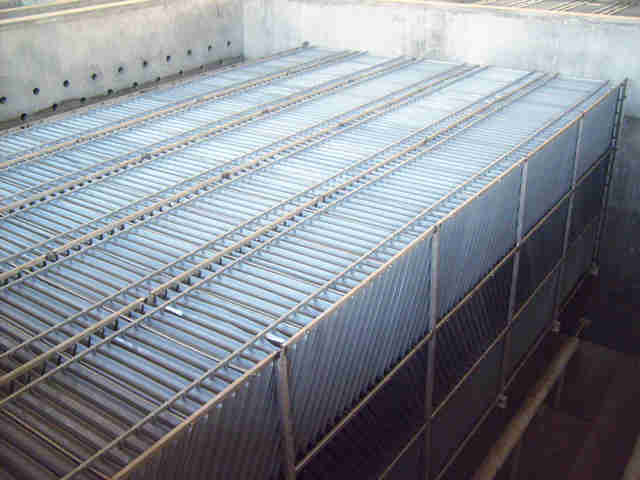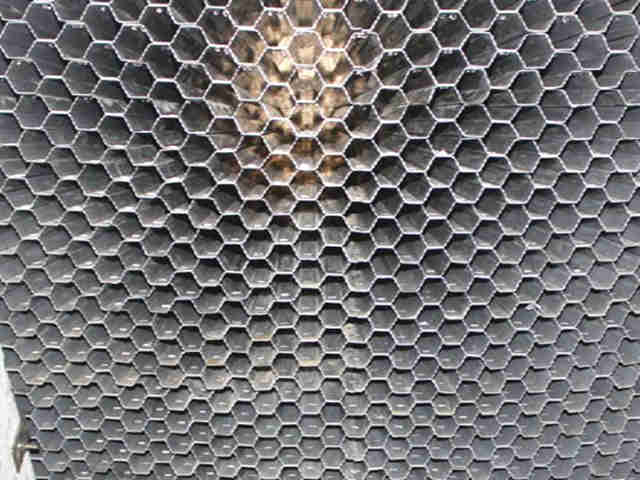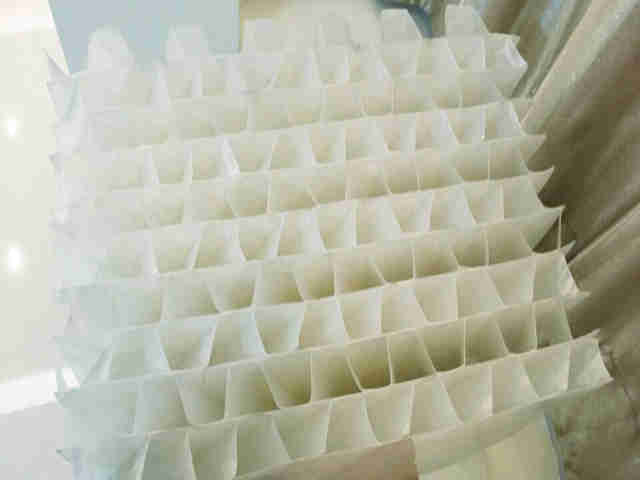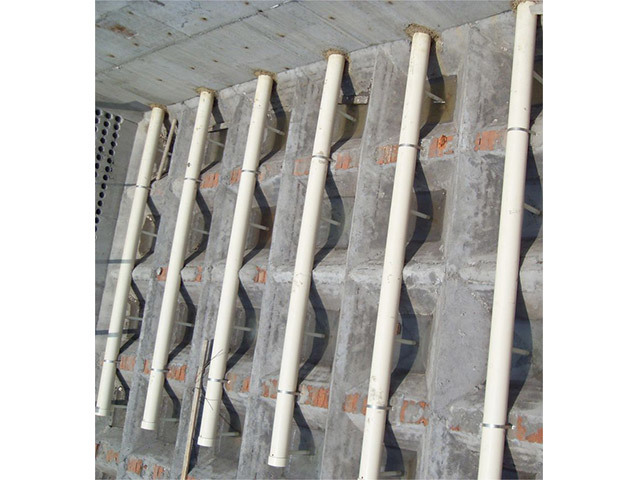
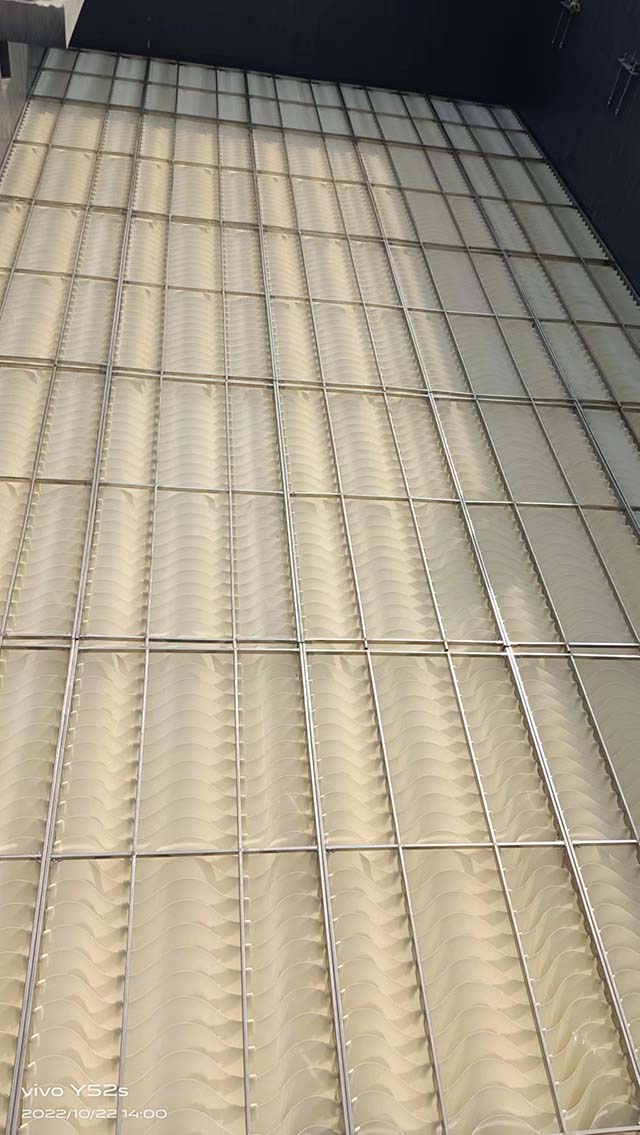
Based on the shallow sedimentation theory, inclined plates are used to increase the effective settling area, reducing the settling distance of particles between plates to less than 0.04 m. This design is the preferred choice for side-flow sedimentation tanks. The water flows horizontally, while the sludge deposited on the inclined plates slides downward vertically. The water flow direction and sludge sliding direction are perpendicular to each other, ensuring that the water flow does not interfere with sludge settling, which is beneficial for solid-liquid separation.
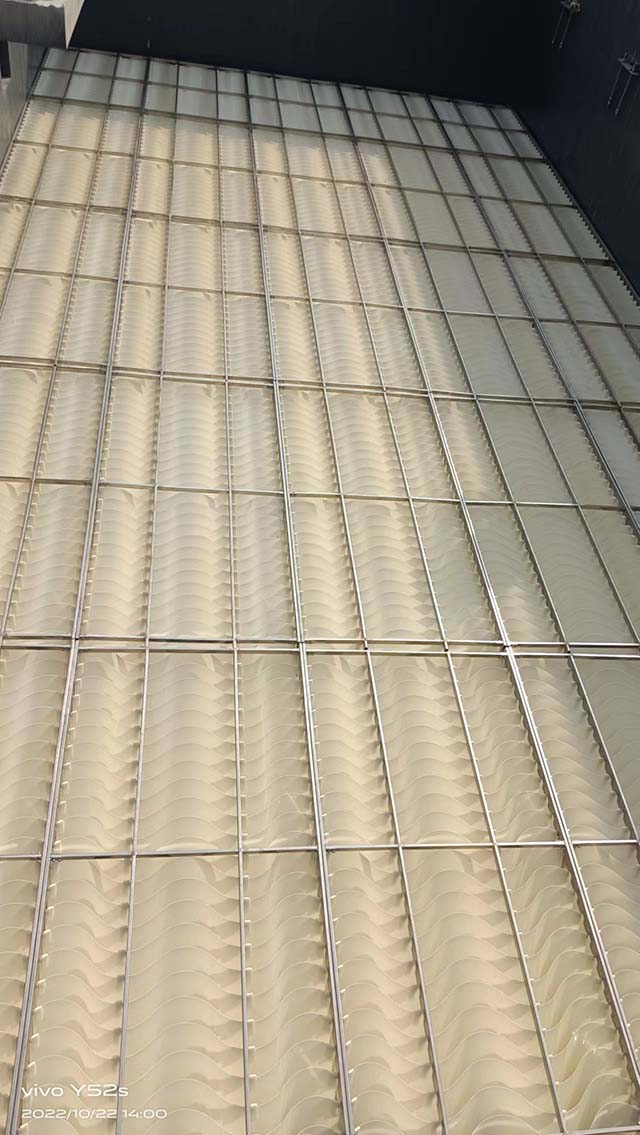
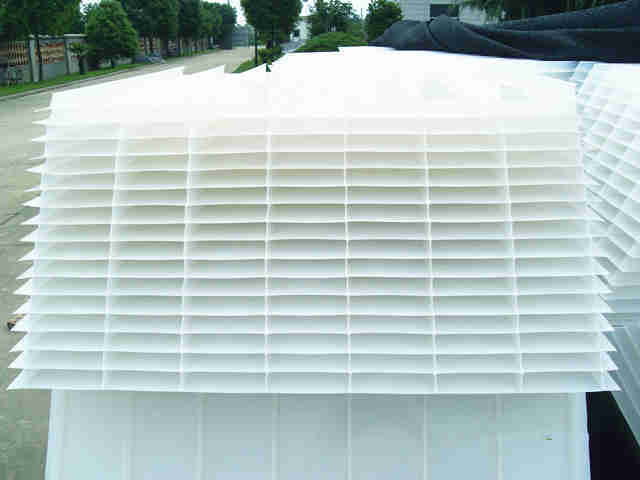
Inside the corrugated plate channels, the water flows in a wavy pattern. Due to the variation of the corrugated gaps, suspended particles are provided with conditions for further flocculation and growth.
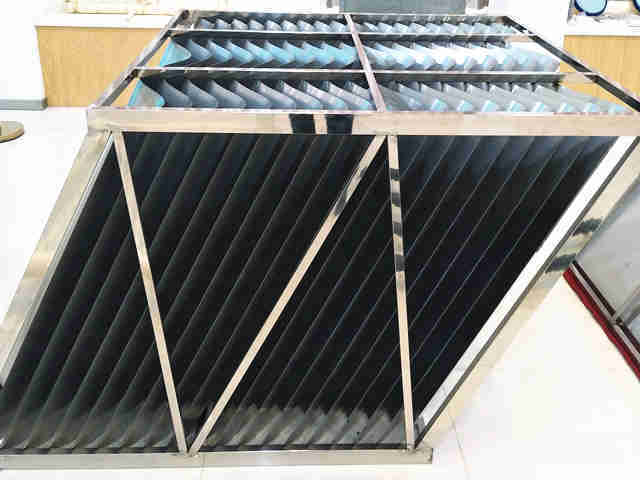
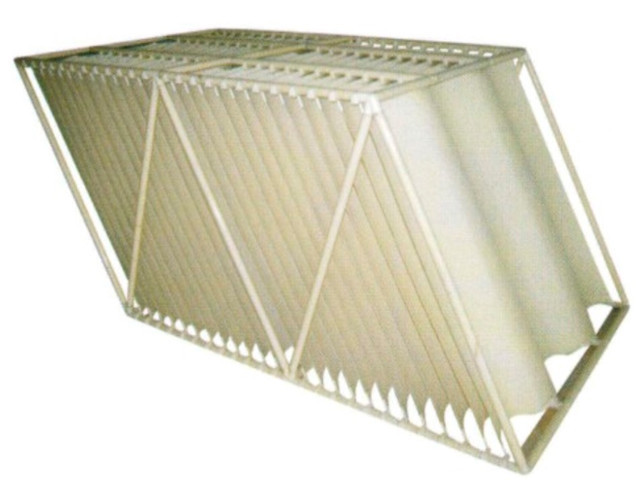
The frame-type corrugated inclined plate settling device is the optimal choice for counter-current inclined plate sedimentation tanks. The sludge deposited on the plate surface converges toward the wave troughs of the corrugated plates, forming sludge bundles, which significantly improves sludge sliding performance, reduces sludge accumulation, decreases the cleaning frequency of the plates, and extends the service life of the system.
Corrugated plates are used instead of flat plates, offering higher rigidity and easier structural support while reducing material consumption compared with flat plates.
The corrugated inclined plates are arranged in parallel and at equal spacing, installed within an inclined-end frame, and fixed by arc-shaped supports to form a corrugated plate module unit.
The corrugated plates and supporting frame are made of food-grade ABS, rigid PVC, or stainless steel.