Online Message
Code
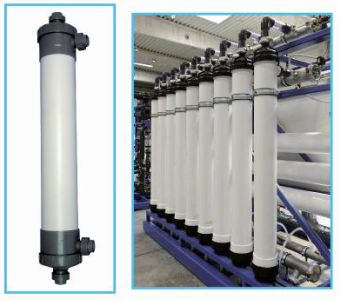
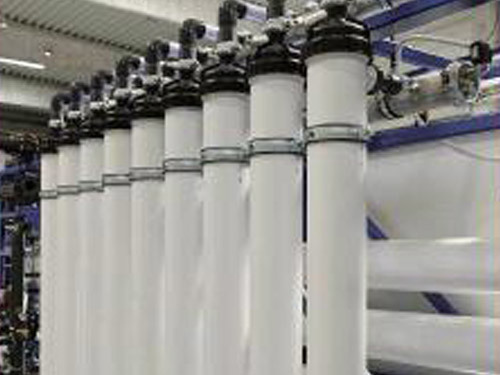
Ultrafiltration membrane module

Ultrafiltration membrane module

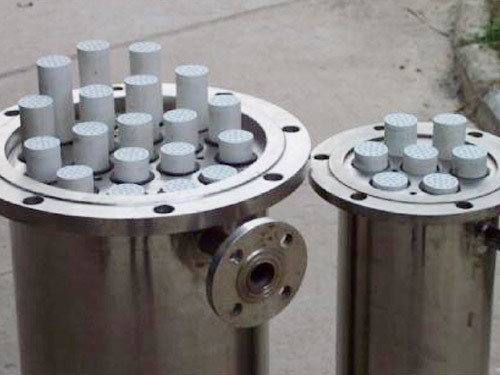
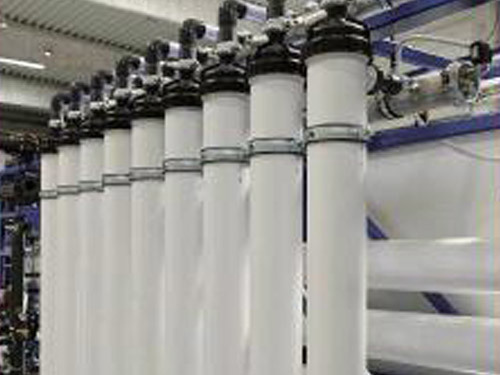
An ultrafiltration membrane module is a core separation component used in water treatment and wastewater treatment systems for removing suspended solids, colloids, bacteria, and high-molecular-weight substances from raw water and feed water. It is widely applied in municipal and industrial treatment processes to improve overall water quality and produce stable treated water for reuse or further purification. The ultrafiltration (UF) process works through a membrane with defined pore sizes, allowing water molecules and low molecular weight substances to pass while retaining larger contaminants. In modern systems, ultrafiltration membrane modules are commonly designed in hollow fiber, spiral wound, or plate and frame configurations, depending on application requirements. In pressurized UF systems, feed water is driven through the membrane under controlled pressure, supporting consistent filtration performance. UF is often used as a pretreatment stage for reverse osmosis (RO membranes) and can also work alongside nanofiltration (NF) processes to improve overall system efficiency in water purification. Ultrafiltration technology is widely used for drinking water production and industrial reuse applications, helping deliver stable and reliable water quality across different operating conditions. For system selection, configuration, or project support, please contact CNWOTE for technical guidance on membrane-based water treatment solutions.
High water permeability, high retention rate, good strength and toughness, high cost performance.
Quality Control

Features:

Large water flux, high retention rate, good strength and toughness, high cost performance

The hydrophilically modified membrane fibers have a smooth surface, and when permeating water, the contact angle of water molecules with the membrane surface is less than 45 degrees, allowing the separation process to be completed at a very low pressure difference. Tested at 25C/0.1MPa water pressure, it can reach twice the water flux of traditional ultrafiltration membranes, saving half of the investment for households.

Using a unique membrane manufacturing process, the mechanical strength of the membrane fibers reaches 1.51MPa, the elongation rate reaches 52%, and the bursting strength reaches 1.3MPa.

The membrane fibers have a stable and consistent narrow distribution of skin layer micropore sizes, with the micropore shape being inverted trumpet-shaped. The pore size of the skin layer that plays a stable retention role is small, while the pore size of the support layer is large, preventing pollutants from entering the support layer and avoiding irreversible blockage.


Application Areas:

Pre-treatment and post-treatment of reverse osmosis, rural drinking water supply treatment, river and lake water purification, municipal tap water treatment